20% OFF
Air Purifying
Tell us how to reach you — we will contact you when it becomes available.
Thank you. Your request has been received. We will contact you when this product becomes available.
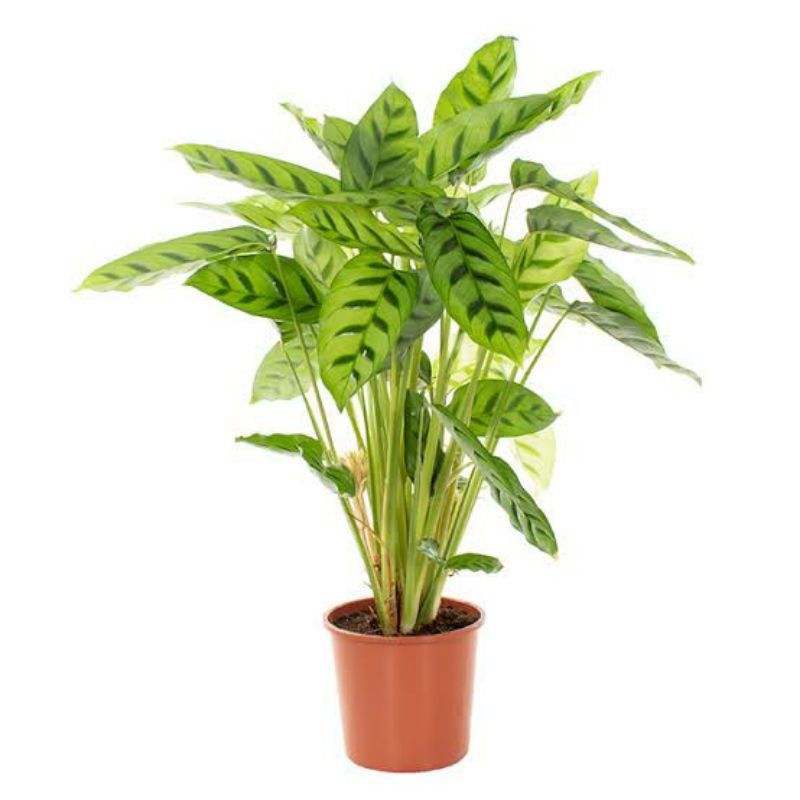

The Calathea Leopardina, botanically reclassified as Goeppertia concinna, is a striking member of the prayer-plant family, prized for its bright green, oval leaves marked with deeper green, leopard-like patterning. Native to Brazil, South America, this elegant statement plant is a Good Mood favorite for collectors who enjoy giving a bit of extra attentive care in return for its beautifully patterned foliage.
Botanical Specifications
Plant Origin & Characteristics
Growth Level & Maintenance
Ideal Placement
Bedroom and living room spots with good indirect light and stable, high humidity.
Frequently Asked Questions
Is Calathea Leopardina safe for pets?
Sources differ on this — some describe it as non-toxic like most Calathea relatives, while others list it as potentially harmful to pets. As a precaution, we recommend keeping it out of reach of curious pets and children.
Why are my Calathea's leaf edges turning brown?
This is usually caused by low humidity or mineral buildup from tap water — increase humidity and switch to filtered water.
Is Calathea Leopardina a good plant for beginners?
It's better suited to those with some houseplant experience, as it needs consistent humidity and careful watering, similar to our Calathea Orbifolia.
Order your Calathea Leopardina online in Bangladesh from Good Mood — every plant comes with a full care guide, safe packaging, and doorstep delivery in Dhaka.
Key Benefits
Care Guide
Watering: Water weekly. Keep soil consistently moist but not soggy. Use filtered or room-temperature water to reduce mineral spotting on leaves.
Light: Best in bright, indirect light; avoid low light, which dulls the pattern, and avoid direct harsh afternoon sun. Ideal near east or west-facing windows.
Humidity: Target 50–60% humidity or higher — this plant is sensitive to dry air. Mist leaves 2–3 times weekly or use a pebble tray. Wipe leaves monthly with a damp cloth.
Temperature: Maintain 18–25°C. Avoid cold drafts and AC vents below 15°C. Ensure good air circulation.
Fertilizing: During the growing season (March–October), feed every 2–3 weeks with a specialized fertilizer. Reduce to monthly in winter.