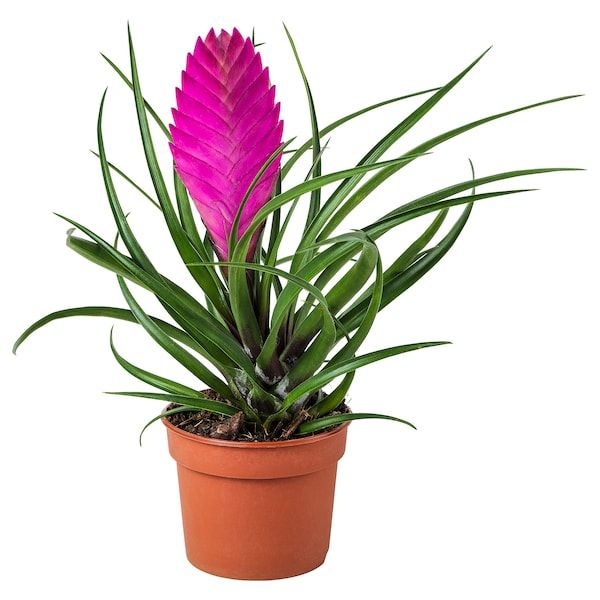

The Pink Quill (Tillandsia cyanea) is a striking air plant from the bromeliad family, celebrated for its vivid pink, paddle-shaped bract from which delicate purple-blue flowers emerge. Native to the tropical forests of Ecuador, this soil-free, low-maintenance plant is a Good Mood favorite for adding a splash of color to homes and offices across Bangladesh — no pot or potting mix required.
Botanical Specifications
- Botanical Name: Tillandsia cyanea
- Also Known As: Pink Quill Plant
- Native Region: Tropical forests of Ecuador
- Common Name: Pink Quill
Plant Origin & Characteristics
- Native Habitat: Epiphytic — grows on trees and rocks in the wild, absorbing moisture and nutrients through its leaves
- Growth Pattern: Compact rosette of narrow, arching grey-green leaves
- Appearance: A vivid pink, quill-shaped bract with small violet-blue flowers blooming from it
Growth Level & Maintenance
- Skill Level: Beginner-Friendly
- Maintenance: Low-Maintenance
- Growth Speed: Slow-Growing
- Lifespan: Produces "pups" (offsets) after flowering, which can be grown on for years of continued blooms
Key Benefits
- Pet-Friendly: Non-toxic to cats and dogs — a safe choice for pet-owning households
- Zero Soil Needed: Grows mounted, in decorative holders, or displayed freely — no pot required
- Striking Bloom: A vivid pink bract with purple flowers that lasts for weeks
- Low-Maintenance: No soil, minimal care — ideal for busy households
- Versatile Styling: Perfect for terrariums, driftwood mounts, and decorative displays
Ideal Placement
Bright kitchen and bathroom windowsills, mounted wall displays, terrariums, and decorative holders — a safe pick for pet-friendly homes.
Care Guide
Watering: As an air plant, it doesn't grow in soil. Mist thoroughly 2–3 times a week, or soak the whole plant in room-temperature water for 20–30 minutes once a week. Shake off excess water and let it dry upside down afterward to prevent rot at the base.
Light: Bright, indirect light is best. Avoid direct harsh sun, which can scorch the leaves.
Humidity: Prefers moderate to high humidity; more frequent misting helps in drier, air-conditioned rooms.
Temperature: Maintain 18–27°C. Avoid cold drafts.
Fertilizing: Feed monthly during the growing season with a diluted, bromeliad-specific or balanced liquid fertilizer, applied via misting.
Frequently Asked Questions
Is Pink Quill safe for pets?
Yes, Tillandsia cyanea is non-toxic to cats and dogs, making it a safe choice for pet-friendly homes.
Do I need soil or a pot for this plant?
No — Pink Quill is an air plant and absorbs water and nutrients through its leaves. It can be displayed mounted, in a decorative holder, or simply placed on a shelf.
My Pink Quill's bloom has faded — is the plant dying?
Not necessarily. After blooming, the mother plant naturally declines but produces "pups" (baby offsets) that can be separated and grown into new blooming plants.
Order your Pink Quill (Tillandsia Cyanea) online in Bangladesh from Good Mood — every plant comes with a full care guide, safe packaging, and doorstep delivery in Dhaka.
📊 Botanical Specifications
- Botanical Name: Pink Quill (Tillandsia Cyanea)
- Origin & Native Region: Tropical Regions
- Common Names: Pink Quill (Tillandsia Cyanea)
- Category: Air Purifying Plants
🌍 Plant Origin & Characteristics
- Native Habitat: Tropical Regions
- Natural Growing Conditions: Found in subtropical to temperate regions
- Growth Pattern: Upright / Bushy
- Appearance: Lush green foliage
📈 Growth Level & Maintenance
- Skill Level: Beginner-Friendly
- Maintenance: Low-Maintenance
- Growth Speed: Moderate to Fast-Growing
- Lifespan: Long-lived houseplant
✨ Key Benefits & Features
- Air-Purifying: Removes common indoor air pollutants
- Stress Relief: Adds greenery and natural beauty
- Visual Impact: Enhances interior spaces
- Easy Care: Forgiving and resilient
- Pet Consideration: Keep away from pets
💧 Watering
Water the plant when the top layer of soil becomes slightly dry. Avoid keeping the soil continuously waterlogged.
☀️ Light
Keep the plant in bright indirect light. Avoid prolonged exposure to harsh direct sunlight.
🌱 Soil
Use a well-draining potting mix that allows excess water to drain freely and keeps the roots healthy.
🌡️ Temperature & Humidity
Keep the plant in a warm environment with moderate humidity. Protect it from extreme temperatures and cold drafts.
✂️ Pruning & Maintenance
Remove yellow, damaged or dead leaves regularly. Occasional pruning helps maintain a clean and healthy appearance.
🌿 Fertilizing
Feed with a balanced indoor-plant fertilizer during the active growing season according to the fertilizer instructions.